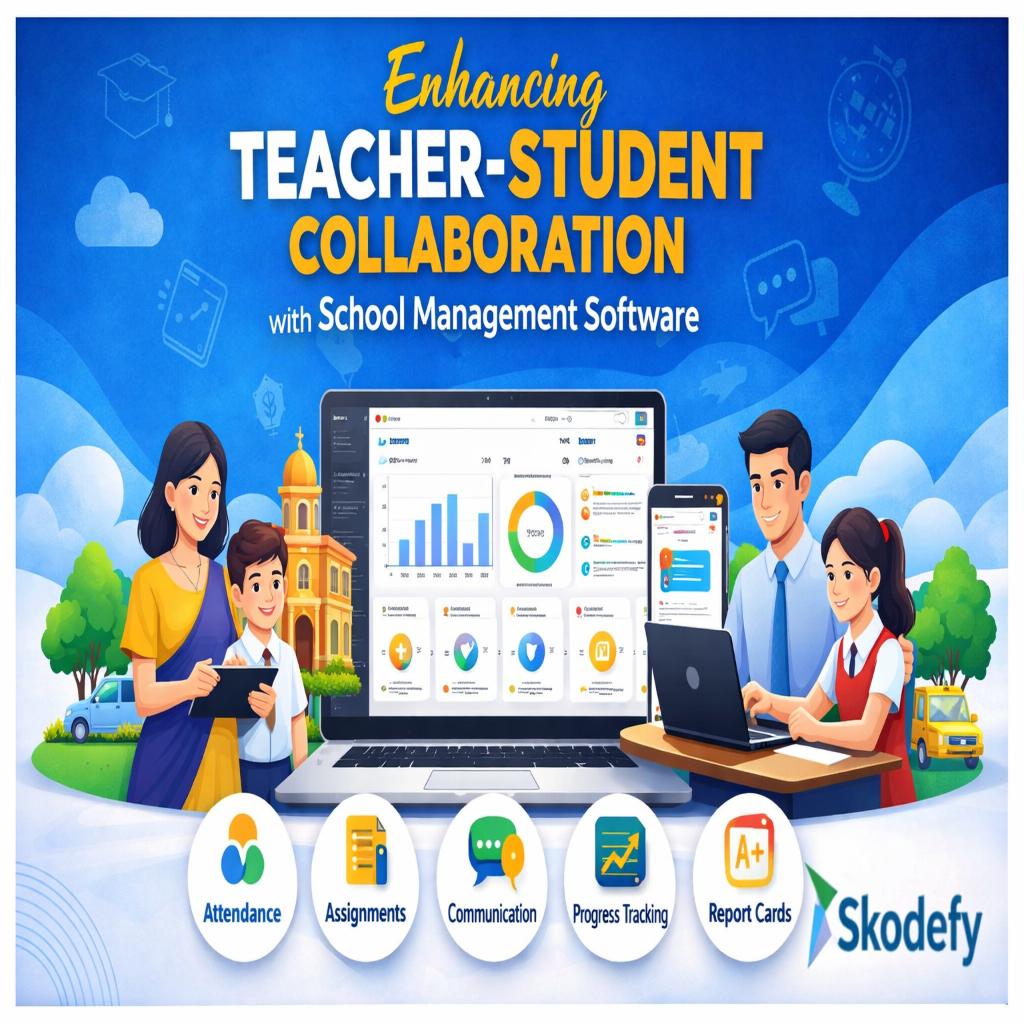
Enhancing Teacher-Student Collaboration with School Management Software
How School Management Software Boosts Communication Between Teachers and Students
Effective communication is the foundation of strong teacher-student relationships. School management software creates a structured digital environment where teachers and students can communicate clearly without delays or confusion. Instead of relying on verbal instructions or handwritten notes, all academic communication happens through a centralized platform.
Teachers can share updates, assignments, feedback, and announcements instantly, while students stay informed and engaged. This improves clarity, reduces misunderstandings, and ensures that learning continues smoothly both inside and outside the classroom.
Real-Time Communication for Better Academic Interaction
School management software enables real-time messaging between teachers and students within a secure system. Students can ask questions related to lessons or homework, and teachers can respond without waiting for the next physical class. This immediate interaction helps clear doubts faster and builds student confidence.
Unlike informal chat platforms, school software keeps communication professional, organized, and monitored. This ensures a safe learning environment while encouraging students to participate actively in their academic journey.
Centralized Platform for Assignments and Study Materials
With school management software, teachers can upload assignments, notes, presentations, and learning resources in one centralized location. Students can access study materials anytime, reducing dependency on physical notebooks or repeated explanations in class.
This organized approach improves preparation for exams, revisions, and daily lessons. Teachers also save time as all students receive the same information simultaneously, creating consistency across classrooms.
Streamlined Assignment Submission and Evaluation
Managing assignments manually often leads to missed submissions and tracking errors. School management software allows students to submit assignments online within defined deadlines. Teachers can easily review, grade, and provide feedback digitally.
This structured system improves accountability for students and reduces paperwork for teachers. It also helps schools maintain accurate academic records without relying on physical storage or manual tracking.
Continuous Academic Progress Tracking
School management software provides real-time visibility into student performance. Teachers can monitor grades, attendance, and learning patterns, while students can view their progress and understand areas that need improvement.
This shared access to academic data encourages open discussions between teachers and students. Instead of focusing only on final exams, learning becomes continuous, transparent, and improvement-driven.
Improved Feedback and Two-Way Interaction
Digital platforms make feedback faster and more structured. Teachers can share detailed comments on assignments, tests, and classroom participation. Students can respond, ask follow-up questions, or request clarification.
This two-way communication strengthens understanding and creates a supportive academic environment. Regular feedback also motivates students to improve consistently rather than waiting for term-end evaluations.
Parental Support in Teacher-Student Collaboration
When parents stay informed, teacher-student collaboration becomes stronger. School management software keeps parents updated about assignments, attendance, and academic progress through structured notifications.
This creates a healthy support system where parents guide students at home without interrupting classroom workflows. Teachers benefit from reduced repetitive queries and more aligned parent communication.
Benefits of Digital Collaboration for Teachers
For teachers, school management software reduces administrative workload and improves time management. Routine tasks like attendance, assignment tracking, and communication become automated and organized.
This allows teachers to focus more on lesson planning, mentoring, and academic improvement. Reduced paperwork leads to better teaching efficiency and job satisfaction.
Real-World Example of Improved Teacher-Student Collaboration
A mid-sized school adopted school management software to improve classroom communication. Teachers started sharing assignments and feedback digitally, while students submitted work online.
Within a few months, missed homework reduced, student participation increased, and parent complaints decreased. Teachers reported better engagement, and students felt more connected to their learning process.
Key Features Supporting Teacher-Student Collaboration
- Admission Management – The admission process becomes simple and organized with digital forms, document uploads, and student data management. Teachers and administrators get quick access to student information from day one, avoiding confusion and paperwork.
- Fee Collection Management – Automated fee collection ensures accurate records and timely updates. Teachers can focus on academics while parents stay informed about fee status without repeated follow-ups or manual coordination.
- ID Card Generation – Student and staff ID cards can be generated automatically with correct details. This improves identification, attendance tracking, and overall school discipline without manual effort.
- Report Card Generation – Teachers can generate digital report cards easily using predefined formats. Grades, remarks, and performance data are compiled accurately, saving time and reducing calculation errors.
- Student Attendance Tracking – Attendance can be marked digitally and shared instantly with parents. Teachers get a clear view of student presence patterns, helping them identify irregular attendance early.
- WhatsApp Communication Integration – Important messages, homework updates, and announcements can be sent directly to parents and students through WhatsApp, ensuring faster communication and better engagement.
- SMS Notifications – Automated SMS alerts keep parents informed about attendance, exams, events, and fee reminders. This reduces manual calling and improves coordination between teachers and families.
- Voice Message Integration – Schools can send voice messages for urgent announcements or instructions. This feature is especially useful when clear communication is required without language or reading barriers.
- RTE Student Management & Reporting – Managing Right to Education (RTE) students becomes easier with proper data tracking and documentation. Teachers and administrators can maintain compliance without extra paperwork.
- UDISE Reporting Support – The system helps schools prepare and submit UDISE data accurately and on time. This reduces reporting stress and ensures government compliance without last-minute issues.
- Affordable and Flexible Pricing – Schools can choose pricing plans based on their size and needs. This makes advanced digital tools accessible even for small and mid-sized schools.
- Cloud-Based Access – Teachers, students, and administrators can access school data anytime, from anywhere. Cloud technology ensures real-time updates, data safety, and smooth collaboration across devices.
How School Management Software Helps Teachers Collaborate Better
- Centralized Academic Communication – School management software provides a single, organized platform where teachers can communicate with students, parents, and even other faculty members. Instead of scattered messages across notebooks, WhatsApp, or emails, all academic communication stays structured and searchable, reducing confusion and saving valuable teaching time.
- Easy Sharing of Lesson Plans and Study Materials – Teachers can upload lesson plans, notes, presentations, and reference materials in one central system. This allows consistent content delivery across classes and sections, helps substitute teachers stay aligned, and ensures students receive uniform academic guidance without repeated explanations.
- Simplified Assignment Distribution and Review – Assignments can be created, shared, collected, and evaluated digitally. Teachers no longer need to manage physical copies or track submissions manually. Automated submission tracking helps teachers focus on quality feedback instead of chasing pending work or correcting administrative errors.
- Real-Time Collaboration Between Teaching Staff – Teachers can collaborate with colleagues by sharing resources, assessment strategies, and academic updates within the system. This improves coordination between subject teachers, class teachers, and academic heads, creating a more unified teaching approach across the school.
- Reduced Administrative Burden for Teachers – Routine tasks like attendance marking, report preparation, and student data updates are automated. This significantly reduces paperwork and repetitive work, allowing teachers to invest more time in lesson planning, student mentoring, and improving classroom engagement.
- Transparent Student Progress Tracking – Teachers get real-time access to attendance records, grades, test performance, and learning patterns. This shared visibility allows teachers to collaborate on academic improvement plans and address learning gaps early instead of waiting for term-end evaluations.
- Structured and Consistent Feedback System – Teachers can provide written feedback on assignments, tests, and class performance through the platform. Students and parents receive clear, documented feedback, reducing misunderstandings and enabling teachers to maintain consistent academic communication without repeated explanations.
- Better Time Management and Teaching Focus – With automated scheduling, reminders, and academic workflows, teachers can manage their time more effectively. Less time spent on coordination and manual tracking means more time for teaching, student interaction, and professional development.
Common Collaboration Challenges Teachers Face Without School Management Software
- Scattered Communication Creates Confusion – When there is no school management software, teachers use different tools like notebooks, WhatsApp, phone calls, and verbal messages. Important information often gets missed or forgotten. This creates confusion, repeated explanations, and extra follow-ups, which makes daily coordination stressful for teachers.
- Too Much Time Wasted on Manual Coordination – Teachers spend a lot of time managing schedules, sharing updates, and reminding students manually. This takes away valuable teaching time. Instead of focusing on lessons and student support, teachers are busy handling routine coordination tasks that could be easily automated.
- No Clear View of Student Progress – Without a centralized system, teachers cannot easily see attendance, test results, or performance history in one place. This makes it difficult for teachers to work together, identify weak areas, and support students properly before problems become serious.
- Assignment Management Becomes Messy – When homework and assignments are shared manually, students often miss instructions or deadlines. Teachers also struggle to track submissions and check work on time. This leads to misunderstandings, repeated reminders, and a lack of discipline in daily academic routines.
- Limited Collaboration Between Teachers – Without a shared digital platform, teachers rarely exchange lesson plans, ideas, or teaching strategies. Each teacher works separately, which reduces teamwork. This lack of collaboration affects consistency in teaching quality across different classes and sections.
- Delayed Feedback to Students and Parents – Without automated systems, feedback on assignments, tests, and behavior often reaches students and parents late. This delay slows down improvement and creates frustration. Teachers also receive repeated questions because information is not shared clearly or on time.
- Lack of Transparency Affects Trust – Manual processes make it hard to maintain clear academic records. When communication is unclear or delayed, misunderstandings arise between teachers, students, and parents. Over time, this affects trust and weakens the overall learning environment.