AI-Powered School ERP Software
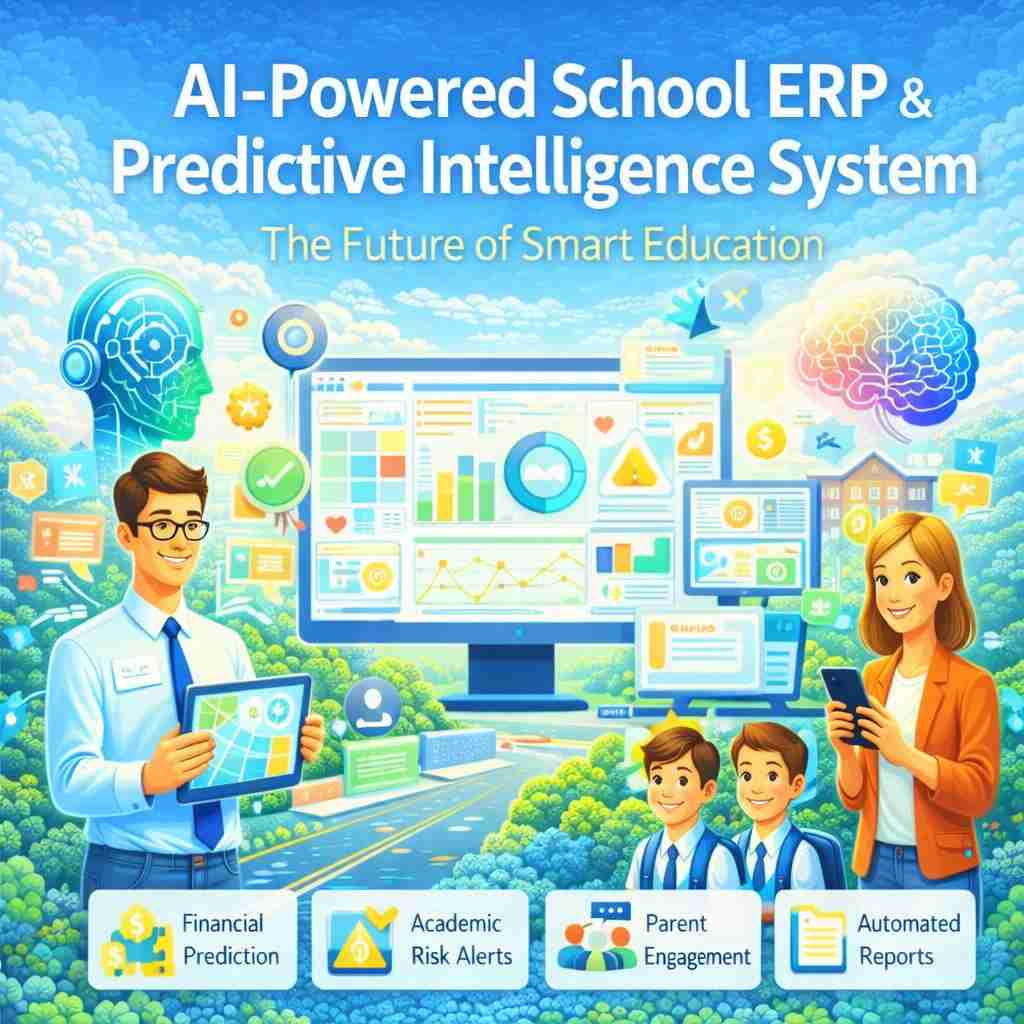
Skodefy: The AI-Powered School ERP That Predicts Problems Before They Happen
Most School ERP software stops at digitization. Schools adopt ERP systems to move from paper-based processes to digital management, which certainly improves efficiency. Attendance is recorded online, fees are collected digitally, and report cards are generated automatically. However, while digitization improves record keeping, it does not automatically improve decision-making or long-term strategic planning.
Attendance? Online. But does your system analyze declining attendance trends before they become a dropout risk? Most traditional ERP systems simply display attendance percentages without identifying patterns, behavioral shifts, or long-term engagement signals that may indicate deeper academic or emotional concerns.
Fees? Online. Digital payment collection simplifies transactions, but does your ERP predict which parents are likely to delay payments next month? Without predictive analytics, finance teams are forced to react only after due dates are missed, creating avoidable stress and cash flow uncertainty.
Report cards? Downloadable. Automated report generation saves time, but does your system analyze performance trends across terms, identify subject-level risks, and suggest early intervention strategies? Storing marks is useful, but interpreting performance patterns is what truly drives academic improvement.
But here’s the real question: in an era where schools generate thousands of data points every week, is your ERP helping leadership teams transform that data into actionable intelligence? Or is it simply functioning as a digital filing cabinet?
Does your ERP help you make smarter decisions? Smarter decisions require forecasting, pattern recognition, and early warning systems. Without predictive insights, principals and administrators often rely on delayed reports and manual observation, which increases operational risk and reduces strategic clarity.
That’s where Skodefy changes the game. Instead of focusing only on data storage, Skodefy applies artificial intelligence and predictive analytics to transform everyday school data into forward-looking insights. It identifies risk patterns, forecasts financial instability, detects academic decline, and highlights engagement gaps before they escalate.
Skodefy is not just a School ERP system. It is an AI-powered, predictive school management platform built for modern institutions that demand clarity, control, and measurable growth. By shifting from reactive problem-solving to proactive planning, Skodefy empowers schools to move beyond automation and enter the era of intelligent education management.
Transforming School Data into Predictive Intelligence
Traditional ERP systems only display dashboards and static reports. While they organize attendance, fee records, exam results, and communication logs efficiently, they rarely interpret the deeper meaning behind the data. Skodefy goes beyond simple visualization. It analyzes historical patterns, behavioral trends, and multi-term performance indicators to convert raw school data into predictive intelligence. This transformation allows administrators to identify risks early, forecast future outcomes, and make data-driven decisions that directly improve academic and financial stability.
From Reporting to Forecasting: The ERP Evolution
Conventional School ERP systems answer one question: “What happened?” Modern AI-powered systems answer a more powerful question: “What is likely to happen next?” This shift from reporting to forecasting represents the true evolution of ERP technology. By applying predictive analytics and machine learning models, Skodefy enables principals and administrators to anticipate academic decline, fee delays, attendance risks, and engagement gaps. Instead of reacting to problems after they occur, schools gain the ability to prevent them proactively.
Predict Fee Defaulters Before Cash Flow Problems Start
Late fee payments directly impact school operations, staff salaries, infrastructure planning, and overall financial stability. Without predictive systems, finance teams must manually track overdue payments and send repeated reminders, increasing administrative workload. Skodefy applies intelligent financial analytics to evaluate historical payment behavior, delay frequency, and engagement patterns, allowing schools to identify potential defaulters before due dates are missed. This proactive approach reduces uncertainty and strengthens revenue planning.
- Calculate default probability based on historical patterns
- Predict expected delay days using behavioral analysis
- Classify parents into high, medium, and low-risk segments
- Identify contributing factors behind payment risk
Imagine having visibility into upcoming payment risks before they disrupt cash flow. Administrators can send early reminders, restructure installment plans when necessary, and forecast monthly revenue with greater confidence. This is not basic reporting — it is financial intelligence powered by predictive analytics.
Predict Student Failure Before Exams
What if you could identify struggling students months before final exams?
- Academic trends
- Attendance patterns
- Assignment completion
- Subject-wise performance
- Failure probability score
- Subject-level risk detection
- Early intervention list
- Predicted pass percentage
Better outcomes. Less stress. Smarter intervention.
Why Traditional School ERP Systems Are No Longer Enough
Traditional School ERP systems were designed primarily to digitize administrative processes. They efficiently record attendance, store examination results, manage fee transactions, and maintain communication logs. While this digital transformation has reduced paperwork and improved operational speed, it has not fundamentally changed how schools make strategic decisions. Data is available — but intelligence is missing. Most traditional ERP platforms function as structured databases rather than intelligent decision-support systems.
The limitation becomes clear when institutions try to identify risks early. A conventional ERP can display declining marks or delayed payments, but it does not analyze patterns across multiple data points to forecast future outcomes. It answers the question “What happened?” but fails to address “What is likely to happen next?” In today’s competitive education environment, reactive decision-making is no longer sufficient.
- No early warning system for potential student failure
- No predictive modeling for fee default probability
- No structured indicators for dropout risk
- No multi-term academic trend forecasting
- No measurable parent engagement intelligence
As student strength grows and operational complexity increases, schools require more than static reports and downloadable dashboards. They need predictive analytics, automated risk detection, and intelligent alerts that enable proactive intervention. Modern educational institutions must evolve from digital management to data-driven leadership — and that requires an AI-powered School ERP capable of transforming information into foresight.
Data Storage vs Data Intelligence
Traditional ERP software is highly effective at storing structured information such as attendance records, examination marks, fee transactions, and communication logs. However, data storage alone does not create strategic advantage. Data intelligence begins when systems analyze patterns across multiple variables and generate forward-looking insights. Without predictive modeling, schools only see numbers on dashboards — not the hidden risks behind those numbers. True intelligence requires pattern recognition, trend analysis, and probability forecasting, which traditional ERP systems typically lack.
The Limitations of Manual Decision-Making
In many institutions, leadership decisions still depend heavily on manual observation, staff feedback, and delayed reporting cycles. By the time academic decline or fee default becomes visible in summary reports, the problem has already escalated. Manual monitoring is time-consuming, inconsistent, and prone to oversight. A reactive decision-making model increases operational risk and reduces strategic clarity. Predictive systems reduce dependency on human guesswork by identifying risk indicators early and presenting structured alerts for timely intervention.
Why Schools Need Predictive Analytics
Predictive analytics empowers schools to move beyond record-keeping and embrace data-driven leadership. By analyzing historical trends in attendance, academic performance, payment behavior, and engagement activity, AI models can forecast financial instability, student underperformance, and dropout probability. This proactive visibility allows administrators to intervene before issues become critical. In an increasingly competitive education landscape, predictive analytics is no longer optional — it is essential for institutional stability and sustainable growth.
Predict Fee Defaulters Before Cash Flow Problems Start
Late fee payments directly impact school operations, affecting salary disbursement, vendor commitments, infrastructure upgrades, and long-term financial planning. When payment collection becomes unpredictable, administrative workload increases and financial forecasting becomes uncertain. Skodefy leverages predictive analytics to analyze historical payment behavior, recurring delay patterns, installment trends, and parent engagement signals to identify potential defaulters before due dates are missed.
- Default probability calculation using multi-term payment history
- Expected payment delay prediction based on behavioral patterns
- High, medium, and low-risk classification of fee accounts
- Behavior-based payment analysis for smarter follow-ups
With this predictive insight, schools can automate early reminders, design flexible installment strategies, and improve monthly revenue forecasting. Instead of reacting to overdue payments, administrators gain advance visibility into potential risks. This transforms fee management from reactive collection into strategic financial planning — delivering stability and operational confidence.
How AI Calculates Payment Risk Probability
AI-driven risk calculation models evaluate multiple data points simultaneously, including previous delay frequency, average payment gap days, installment compliance, communication responsiveness, and seasonal trends. Machine learning algorithms identify recurring patterns across large datasets to generate a probability-based risk score for each account. This risk score is continuously updated as new data becomes available, ensuring dynamic and accurate forecasting. By combining behavioral analytics with financial data, Skodefy provides a structured, measurable approach to predicting payment instability.
Revenue Forecasting for Financial Stability
Revenue uncertainty is one of the biggest operational challenges for growing schools. Without clear forecasting, institutions struggle to plan salary disbursements, infrastructure upgrades, technology investments, and vendor payments with confidence. Predictive financial modeling inside an AI-Powered School ERP allows administrators to estimate expected monthly collections based on historical trends and risk probabilities. By analyzing past payment cycles, delay frequency, and parent behavior patterns, Skodefy enables schools to create realistic revenue projections, ensuring long-term financial stability and reduced cash flow disruption.
Reducing Manual Follow-Ups with Smart Alerts
Manual fee follow-ups consume administrative time and often create unnecessary friction between schools and parents. Smart alert systems powered by predictive analytics automate early reminders before due dates are missed. Instead of reacting to overdue payments, schools can proactively notify at-risk accounts with structured communication workflows. This reduces repetitive calling, improves payment compliance rates, and allows administrative teams to focus on strategic planning rather than routine tracking. Automation transforms fee management from a reactive task into a streamlined, intelligent process.
Predict Student Failure Before Final Exams
Waiting for final examination results to identify academic decline is no longer an effective strategy. By the time annual results are declared, intervention opportunities may already be limited. Skodefy continuously analyzes ongoing academic performance across terms, assignments, attendance records, and internal assessments to detect early warning signs. This proactive academic monitoring system empowers teachers and principals to take corrective action months before performance reaches critical levels.
- Attendance trend analysis across multiple terms
- Assignment completion rate consistency tracking
- Subject-wise performance movement evaluation
- Internal assessment stability monitoring
The AI engine processes these academic indicators collectively rather than in isolation, ensuring a holistic evaluation of student performance patterns. Instead of focusing only on current marks, the system identifies gradual performance decline and irregular engagement signals.
- Failure probability score generation
- Subject-level risk alerts with priority classification
- Structured early intervention student lists
- Predicted overall pass percentage forecasting
With these predictive insights, teachers can design remedial classes, arrange targeted mentoring sessions, and conduct structured parent meetings well before final exams. This approach reduces stress for students, improves pass percentages, and strengthens institutional academic performance outcomes.
Academic Trend Analysis Using AI
Academic performance rarely declines suddenly; it usually follows a gradual downward pattern across assessments. AI-driven trend analysis evaluates multi-term score movement, subject consistency, attendance behavior, and participation levels to identify subtle warning signals. By examining longitudinal academic data, Skodefy recognizes performance dips that may not be obvious in a single-term report. This early detection mechanism helps schools prevent academic failure rather than simply documenting it.
Subject-Level Risk Detection
Students often struggle in specific subjects rather than across the entire curriculum. Predictive models isolate subject-level performance deterioration and categorize risk severity. Instead of labeling a student as “weak,” the system identifies precise academic gaps, enabling targeted subject-specific intervention. This precision improves teaching effectiveness and ensures remedial efforts are data-driven rather than generalized.
Early Intervention Strategy Planning
Predictive intelligence is most powerful when combined with structured action planning. Skodefy generates prioritized lists of high-risk students along with contextual insights explaining the underlying performance decline. Teachers and principals can design customized support plans, monitor improvement cycles, and measure intervention impact. Early intervention reduces dropout probability, strengthens confidence, and enhances overall academic success across the institution.
Attendance Intelligence Beyond Percentages
Attendance percentage alone does not provide meaningful insight into student engagement or long-term academic risk. A student with 82% attendance may not appear critical in isolation, but gradual weekly decline patterns could indicate disengagement or emerging issues. Skodefy analyzes attendance data across time intervals, behavioral clusters, and class-level comparisons to detect deeper trends that traditional dashboards overlook.
- Weekly absentee pattern detection
- Gradual attendance decline recognition
- Chronic absence probability forecasting
- Class-level attendance health analysis
By converting attendance records into predictive risk indicators, schools can identify students who may require counseling, parental communication, or academic support. This proactive attendance intelligence reduces dropout risk, improves classroom discipline, and strengthens overall institutional stability.
Weekly Absentee Pattern Detection
The system identifies repeated absence patterns across specific days or weeks.
Chronic Absence Risk Identification
Long-term absence signals are analyzed to reduce dropout probability.
Attendance Trends & Dropout Prevention
Predictive alerts enable counseling and parental engagement before academic decline accelerates.
Parent Engagement Intelligence
Parental involvement directly impacts student success. Skodefy analyzes engagement signals:
- Mobile app login frequency
- Message interaction rate
- Fee payment punctuality
- Event participation activity
The system generates a Parent Engagement Score, helping schools identify families that may need proactive communication.
Parent Engagement Score Explained
Engagement score is calculated based on communication responsiveness, payment consistency, and event participation.
Strengthening Parent-School Relationships
Proactive engagement strategies build long-term trust and improve academic outcomes.
AI-Powered Automated Academic Report Writing
Teachers spend hours writing repetitive academic remarks. Skodefy helps generate structured and personalized academic summaries using AI.
- Term performance summary
- Subject-specific feedback
- Strength highlights
- Improvement suggestions
- Actionable study recommendations
Teachers review, edit if needed, and publish — saving time while maintaining quality.
Maintaining Teacher Control
Teachers retain final editing authority while AI assists in drafting structured remarks.
Saving Time Without Compromising Quality
Automation reduces repetitive writing workload while maintaining academic standards.
Applied AI in Education – Practical, Not Promotional
Skodefy focuses on measurable outcomes:
- Reduced teacher workload
- Improved pass percentage
- Lower dropout probability
- Stable fee collection
- Better administrative decisions
This is real AI for real schools.
Real-World Use Cases of AI in Schools
From dropout prevention to revenue forecasting, predictive ERP creates measurable institutional impact.
AI as a Decision Support System
Principals gain data-driven confidence while making academic and financial decisions.
Who Should Use an AI-Powered School ERP?
- Private Schools
- CBSE, ICSE & State Board Institutions
- Multi-Branch School Groups
- Growing Schools Managing 500+ Students
- Institutions Seeking Data-Driven Management
From School ERP to Predictive School Intelligence
The future of education management is not just digital. It is predictive. It is proactive. It is intelligent.
An AI-Powered School ERP & Predictive Intelligence System transforms school management from reactive problem-solving to proactive decision-making.
Frequently Asked Questions (FAQs)
What is an AI-Powered School ERP?
An AI-Powered School ERP is an advanced school management system that not only stores data but analyzes patterns and predicts academic and financial risks using intelligent algorithms.
How does predictive intelligence help schools?
Predictive intelligence identifies trends in student performance, attendance, fee payments, and engagement — allowing administrators to act before issues escalate.
Can AI accurately predict student failure?
AI analyzes historical academic data, attendance patterns, and assessment trends to generate probability-based predictions that help schools intervene early.
Is school data secure in AI-based ERP systems?
Yes. Skodefy uses encrypted communication, secure cloud infrastructure, and role-based access controls to ensure student and institutional data remains protected.
Is AI-powered ERP suitable for small schools?
Yes. Even small and mid-sized schools benefit from predictive insights. While large institutions use AI for scalability and complexity management, smaller schools can leverage predictive analytics to improve fee collection consistency, academic monitoring, and operational efficiency without increasing administrative workload.
How does predictive analytics improve student performance?
Predictive analytics identifies gradual academic decline by analyzing attendance patterns, assignment completion rates, subject-level performance trends, and internal assessments. By detecting early warning signs, schools can initiate remedial classes, mentoring programs, and parental discussions before final exams, improving overall pass percentage and student outcomes.